 Email: info@sientechnology.com

All News
Solving “Diverse, Heavy, and Irregular” Inventory Challenges with a Multi-Zone Automated Warehouse
Mar
Industrial warehouses handling large, heavy, and non-standard materials typically face three operational bottlenecks:
1.high SKU diversity with mixed dimensions and load types,
2.labor-intensive movement of long/heavy items,
3.limited traceability in fast-changing inventory environments.
A recent project in the coal and energy value chain addressed these constraints by implementing a multi-zone automated warehouse and distribution center.
Engineering for mixed cargo realities
Instead of forcing all materials into one process path, the design introduced differentiated storage and handling logic:
- AS/RS stacker-crane zone for structured high-density storage,
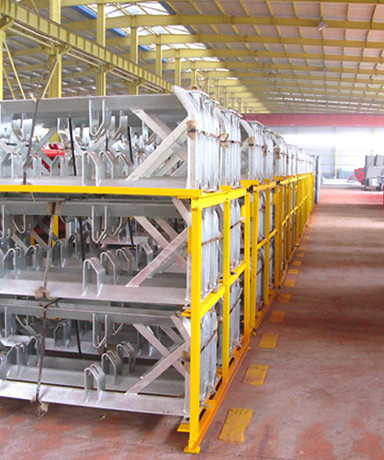
- cantilever and irregular-goods zones for long or non-standard parts,
- platform/rack zones for medium and large materials,
- VLM zone for small, high-frequency items.
The facility now manages around 3,745 effective storage locations and supports a broad material portfolio, from mechanical spares and MRO items to long steel parts and selected controlled goods.
Handling automation with safety and consistency in mind
For long and heavy loads, dedicated equipment was integrated into a coordinated network:
- Stacker Cranes and conveyors for repetitive transport lanes,
- AGVs for flexible internal transfer,
- lifting/hoisting support (including KBK-type systems) for specific handling tasks.
This architecture supports a high level of automated movement (reported around 90% in applicable flows), while reducing repetitive manual handling and associated safety exposure.
In operational terms, the system can process 80+ pallets per hour in suitable scenarios, depending on SKU mix and task profile.
Data flow as an operational control point
The software stack connects execution and visibility:
- WMS for inventory rules and task management,
- WCS for equipment orchestration,
- 3D visualization for status monitoring and exception response.
Functions such as inventory alerts, shelf-life monitoring, replenishment rules, and one-click trace checks help teams move from reactive operations to planned execution.
What other industrial operators can apply
For warehouses with “diverse + heavy + irregular” stock, three design principles are broadly transferable:
- zone by material behavior, not by legacy department boundaries;
- automate repetitive high-risk transport first;
- treat WMS/WCS integration as core infrastructure, not an add-on.
